Guyana's MV Barima Ferry TragedyA Public Record · Independent, not government-affiliated
Georgetown → Port Kaituma · July 18–19, 2026

A Public Record of Guyana's Deadliest Maritime Disaster.

Months after the MV Barima sank, families are still waiting for answers. This page documents what happened, the search, rescue and stalled salvage effort, survivor accounts, the Commission of Inquiry, and civil society's demands for accountability — kept current as the story develops.

The MV Barima, the Georgetown–Mabaruma–Port Kaituma supply ferry, photographed years before the July 2026 disaster.
The MV Barima, photographed prior to the disaster. Photo: Kevin Gabbert, via Wikimedia Commons.
Last compiled 12 October 2026 · figures below are updated as officials and courts confirm them
Passenger Manifest — MV Barima, 18 July 2026 Discrepancy under review by the Commission of Inquiry
Recorded on departure manifest
133 (116 passengers + 17 crew)
Later revised figure aboard
~179 people
Confirmed dead
73
Still missing / rescued alive
~30 missing · 76 rescued
Figures as reported at the end of September 2026. The ship remains on the seabed; no salvage contractor has been confirmed. See the full source list at the foot of this page.
01 — Overview

What is Guyana's MV Barima tragedy?

A brief account of what happened, and why months later it remains a national reckoning.

On the night of Saturday, July 18, 2026, the MV Barima — a state-owned ferry operated by Guyana's Transport and Harbours Department — capsized and sank in the Atlantic Ocean off the Essequibo coast while carrying passengers and cargo from Georgetown to the remote North West District settlement of Port Kaituma. Officials have called it the deadliest maritime disaster in the country's history.

The ferry's departure manifest listed 133 people — 116 passengers and 17 crew — but that figure was revised upward after officials reviewed the boarding process: roughly 179 people are now understood to have been aboard. By early August, 73 bodies had been recovered and 76 people had been rescued; about 30 remain unaccounted for. The ship itself is still on the seabed. No salvage contractor has been confirmed, and families have organized under the banner "Float the Barima" to press for it to be raised.

In the months since, the tragedy has widened into a national reckoning: over the age and maintenance of state vessels, passenger registration and cargo-loading practices, the treatment and compensation of survivors and bereaved families, the independence of the Commission of Inquiry investigating the sinking, and the accountability of the officials responsible for maritime oversight. The government has charged three crew members with murder — charges their lawyers are now seeking to have stayed — opened a Commission of Inquiry, and faced sustained protest from civil society, Indigenous organizations, families, and the political opposition.

02 — In Memoriam

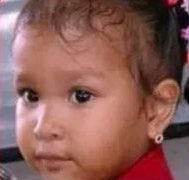
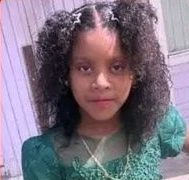
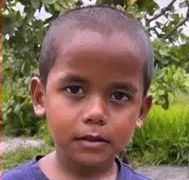
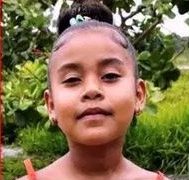
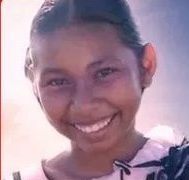
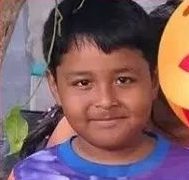
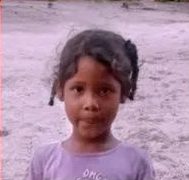
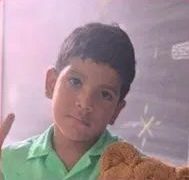
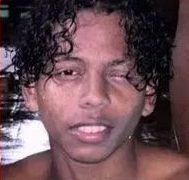
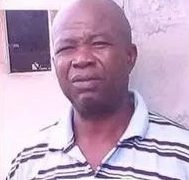
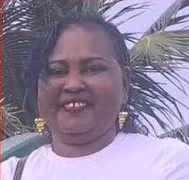
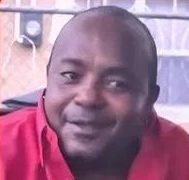
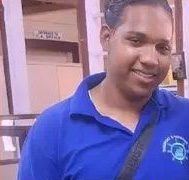
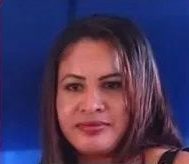
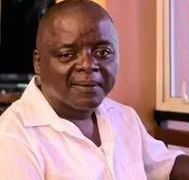
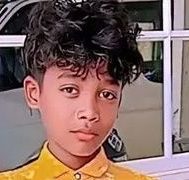
Some of those we lost

Children, parents, grandparents. They were going home to the North West. These are 26 of the more than 100 people who died or are still missing.

Argelys 'Kelly' Williams
Viviana Sadruddin
Viviana Sadruddin
Akeela Rodrigues
Akeela Rodrigues
Rubina Hernandez
Rubina Hernandez
Timar Manoharlall
Timar Manoharlall
Samara Manoharlall
Samara Manoharlall
Shamera Smith
Shamera Smith
Nathaniel Matabheek Jr.
Natalia Matabheek
Natalia Matabheek
Claibelis Fraser
Claibelis Fraser
Analisa Marques
Analisa Marques
Adans Williams
Adans Williams
Ulanda Marques
Ulanda Marques
Andriel Bautista
Andriel Bautista
Oxwell John
Oxwell John
Marcia Beharry
Marcia Beharry
Omar Harris
Omar Harris
Kevin Wilson
Kevin Wilson
Clamond King
Clamond King
Marian Bernard
Marian Bernard
Silvester Peters
Silvester Peters
Christiano Rodrigues
Dwayne Forbes
Dwayne Forbes
Shivanna La Cruz Romascindo
Neil Cort
Neil Cort
Ronaldo Poon
Ronaldo Poon

Photos and names published with care, drawn from public tributes and reporting. If anything here should be corrected, it will be.

03 — Vessel & Voyage

MV Barima history & the fateful journey of July 18–19

An aging lifeline for hinterland communities, and the night it went down.

A 40-metre link to the North West

Built in Scotland in 1939, the MV Barima was 87 years old at the time of the disaster — 40.26 metres long and 8.87 metres wide, with two decks, a rated capacity of 394 passengers and 18 crew, and a cruising speed of roughly 8.5 knots. For more than four decades it had run the Georgetown–Port Kaituma route via Mabaruma and Morawhanna, carrying passengers and cargo to communities that are largely Indigenous and riverain, with few affordable alternatives to the ferry. The vessel was also uninsured at the time of the sinking. Its safety equipment was reported to include 250 life jackets and eight life rafts.

A replacement vessel already existed. In April 2023, an India-built ferry, the MV Ma Lisha, was commissioned at a cost of roughly US$12.7 million, explicitly to replace the Barima and cut the crossing time nearly in half. More than three years later, the Ma Lisha had still not entered service — officials said it was awaiting completion of a new wharf, or stelling, at Port Kaituma, originally due in 2024 and still unfinished at the time of the sinking.

The voyage

3:15 PM
18 Jul
The MV Barima departs Georgetown bound for Port Kaituma, carrying passengers, crew, vehicles and an estimated 268 tonnes of cargo loaded for government and private interests. Many passengers settle into hammocks for the normal 18–24 hour crossing, as is customary on the route.
Evening
Survivors later describe overcrowding, cargo that was not properly secured, and engine trouble before the capsize. Officials have disputed early claims of mechanical failure and overbooking, though internal documents later reported by Kaieteur News indicate the vessel had known technical faults before it left port.
~11:00 PM
18 Jul
Roughly seven nautical miles off the coast near the Pomeroon River, a large wave — described by officials as an apparent rogue wave — strikes the vessel. The MV Barima capsizes and sinks, by some survivor accounts in under four minutes.
11:01 PM
An air traffic control tower at Timehri receives a distress call. Darkness, heavy swells and what survivors describe as a slow rescue response scatter survivors across the water, clinging to floating debris and cargo.
04 — Response

Search, rescue & the stalled salvage

Guyana's largest-ever maritime search, hampered from the first hour — and a wreck that, months later, still hasn't been raised.

The initial rescue effort was hindered by nighttime conditions and a shortage of vessels equipped with scanning technology, leaving rescuers to rely on sight and sound to locate survivors in open water. Companies from Guyana's oil and gas sector subsequently deployed scanner-equipped vessels to assist, while the government activated divers to search the wreck for victims. The operation drew in the Guyana Defence Force Coast Guard and Air Corps, the Guyana Police Force, MARAD, the Civil Defence Commission, local divers, volunteers and private boat owners, alongside international partners including specialist divers from France, Trinidad and Tobago, and Brazil.

76
Rescued survivors
73
Bodies recovered
~30
Still unaccounted for
12
Weeks ship unsalvaged

Formal search and recovery operations were declared concluded in early August. What hasn't happened since is the recovery of the ship itself.

The ship has not been raised

The government began looking for a salvage contractor in August. Ten companies expressed interest by the August 14 deadline, and three were asked for financial bids, submitted on September 8. The tender requires the ship to be raised intact, and Kaieteur News questioned whether any of the three bidders had done that kind of salvage work before. On September 26, President Irfaan Ali said the bids were being re-evaluated. Families have picketed under the call "Float the Barima" — they want the ship raised both to recover their loved ones' remains and to preserve the evidence the Commission of Inquiry needs.

BK International named preferred bidder

On October 7, Commissioner Dr. Andrzej Jasionowski, a forensic naval architect and marine engineer, told families at the Arthur Chung Conference Centre that BK International had been chosen to salvage the vessel. Media reported that the government itself had made no announcement. The National Procurement and Tender Administration Board (NPTAB) then listed the award to BK International, on its website, dated October 7. Jasionowski said he met the BK International team on October 6 to go over its gear and plans, and that the aim is to raise the ship without damaging or altering evidence. BK International has promised daily reports over the next two weeks, and Jasionowski told families preparations could take another week or two.

G$1.034B
BK International (lowest bid)
G$1.895B
Industrial Fabrication Inc.
G$2.035B
KMS B.V. (Netherlands)

Amounts in Guyana dollars, from NPTAB records as reported by Kaieteur News (contract no. 211/2026/34, "no cure, no pay"). Some outlets gave the figures in US dollars or without a currency, and one report gave KMS B.V.'s bid as US$2.035 million, so treat the KMS figure with caution. Kaieteur News noted the award appeared on the NPTAB website on October 7 without a government announcement. The tender requires a non-destructive lift, with the vessel raised intact onto a barge, and 5 to 10 years of proven regional salvage experience. Critics have questioned BK International's selection and experience. No start or completion date for the salvage has been reported.

The Commission has said it does not award the salvage contract and cannot assess the contractor's qualifications. Chairman Smith told families that raising the vessel is outside the Commission's powers and terms of reference, and that it cannot pause its other work while waiting. Commissioner Nyree Dawn Alfonso, who says she has nearly 30 years of salvage experience, cautioned that a poorly planned salvage could damage the vessel and destroy evidence. Families say they were never told who won the contract, the firm's experience, or how long the work would take. Royston Frank, whose son Rawle was a crew member, said the vessel should be raised before the inquiry goes further.

Gailann Thomas · lost brothers Kyle and Brian

"We need answers; our brother's remains."

President Irfaan Ali · 26 September

"We are not hiding from salvaging; there is a process and that process is ongoing."

05 — Testimony

Eyewitness accounts of survivors & others

First-hand accounts, paraphrased from public interviews and statements to Guyanese media and the Department of Public Information.

Leon Murray — Mabaruma, lost six relatives

Murray boarded with family members and was among the few to survive; he lost six relatives in the sinking. He turned down a government settlement offer of $5 million total for all six, and has told reporters he is "looking for justice" rather than a payout.

Ron Bovell — survivor, lost six family members

Bovell says the engine stalled repeatedly on the journey and that visible overloading was reported to the captain before the vessel capsized — an account that conflicts with early official statements dismissing mechanical failure and overbooking.

Helena Moonsammy — survivor, at an informal meeting with the Commission

She says she was at the back of the boat with eight family members and grandchildren when it capsized. "I looked up for the life jackets. But them life jackets was under lock and key!" She could not swim, held on to a box, and was rescued around 7:00 am the next day, about nine hours later. Four of the eight children survived and four died. This is her account as reported by Kiskadee Watch; the claim about the life jackets has not been independently verified, and the Commission's inquiry covers the availability of lifesaving equipment.

Ruth Mendonca

Escaped with her brother; told the Department of Public Information she felt grateful to have survived, and described support from Ministry of Human Services social workers in the days after.

Asif Khan

A survivor who noted this was not his first boat accident, and said he remained thankful to be alive.

Cox & Devon Gaskin

Separately clung to floating debris — cargo boards and empty water bottles — for hours in the dark, shouting toward rescue-boat lights that could not see them, until the Coast Guard located them.

Nathaniel Matabheek

Survived with his wife and brother, but lost his children, Nathaniel Jr. and Natalia, among those confirmed dead in the sinking.

06 — Aftermath

Families say they have been left on their own

A support program announced early has not, by families' own accounts, reached most of them.

President Ali set up the H.E.A.R.T. Initiative to give families long-term help — legal assistance with documents, counselling, medical care, spiritual support, and help for affected children. Families say little of it has reached them. One family received two food hampers. Others say social workers stopped visiting, especially after families began to protest.

Settlement offers have also drawn criticism. Leon Murray turned down a government offer of $5 million total for the six relatives he lost. The family of chief engineer Paul Seepersad has likewise refused a proposed settlement, saying they would effectively have to "sign away their rights." Families have told reporters they were pressed to sign documents they fear would release the government from legal or financial responsibility for the sinking. Burial-cost payments have also been inconsistent: the Cort family says it received $650,000 for each missing relative, while other families received $350,000, with no explanation for the difference given.

Diane Cort · whose husband Neil is still missing

"For about three weeks now, nobody hasn't come back to my home."

Families meet the Commissioners

In the first week of October, families, survivors, civil society groups and opposition parties met commissioners at the Arthur Chung Conference Centre. These were informal sessions, not evidence hearings. Families pressed for the ship to be raised and for answers on the delay's effect on recovering the missing and preserving evidence. Jasmin Cort, whose father Neil and uncle Kenrick are still missing, asked whether the inquiry would look at mechanical failures, maintenance, inspection certificates, overcrowding and earlier warnings. Samantha Ramitt, who lost her only daughter, urged that the vessel be raised and said she has little confidence in accountability. Dolly Cox, who lost her father, described earlier incidents on the vessel, including an engine failure and a fire. Odessa Primus, a member of parliament, asked why families were still waiting after a 14-day period the President had announced. Attorney Christopher Ram said the public was not consulted on the Commission's composition or terms of reference.

Chairman Smith said the commissioners would not be directed by the government that appointed them. Jasionowski said document requests had gone to the Demerara Harbour Bridge and MARAD, some already answered, and that the Commission had asked for information covering "pretty much the entire fleet" operating in Guyana.

Before you sign anything: families have reported being asked to sign papers in exchange for payment. You do not have to sign on the spot — ask for a copy, take your time, and have a lawyer or someone you trust read it first.
07 — Inquiry

Commission of Inquiry

An international panel with a broad mandate — now entangled with the criminal case against three crew members.

On July 26, 2026, President Irfaan Ali announced a five-member international Commission of Inquiry (COI) to investigate every phase of the disaster, chaired by retired Belizean judge Godfrey P. Smith, CARICOM's High-Level Representative for Law and Criminal Justice. Commissioners were sworn in on July 30. According to its terms of reference, the Commission examines the vessel's seaworthiness and maintenance history, passenger-capacity enforcement and manifest accuracy, cargo-loading practices, the adequacy of emergency response and search-and-rescue capacity, and regulatory oversight by MARAD — and will recommend reforms.

On September 1, the Commission formally called for evidence from the public. Its rules were gazetted on September 29, which allow survivors and bereaved relatives to apply for "standing" — a formal part in the hearings — and provide for public hearings at the Arthur Chung Conference Centre, and the Commission's website, meant to be the public record of the inquiry, was not yet live on October 7.

Public hearings open: the Chairman's statement

The Commission held its first, preliminary public hearing on October 7 at the Arthur Chung Conference Centre. In his opening statement, Chairman Godfrey P. Smith, a Senior Counsel and former judge of the Eastern Caribbean Supreme Court, set out how the Commission will work. The five commissioners are Justice Godfrey P. Smith (Belize), Dr. Andrzej Jasionowski (Poland), Nyree Dawn Alfonso (Trinidad and Tobago), Captain Hamada Fouda (Jamaica) and Rear Admiral (Ret'd) Hayden Pritchard (Trinidad and Tobago).

Chairman Godfrey P. Smith · 7 October

"Our responsibility is to identify and examine those matters fairly and precisely, to follow the evidence wherever it leads and to frankly and fearlessly report our findings."

Six areas of inquiry. The Commission will examine (1) the seaworthiness and safety of the vessel; (2) passenger and cargo operations, including manifests, loading, hazardous material and lifesaving equipment; (3) the crew's qualifications, conduct and decision-making; (4) search, rescue and recovery; (5) regulatory and institutional oversight, including the Transport and Harbours Department and the Maritime Administration Department; and (6) human factors and emergency decision-making. The mandate covers the circumstances before, during and after the sinking.

An inquiry, not a trial. The Chairman said the Commission will not decide anyone's criminal guilt or civil liability, and its recommendations are not legally binding. Evidence that requires it can be referred to other authorities, and the report "may therefore be the catalyst for civil and criminal proceedings to follow." He said the Commission can summon witnesses and compel documents and evidence, and that anyone who may face adverse criticism must be given the earliest practical chance to respond.

Independence. "We are not an arm of the Government or indeed of any other institution or entity," the Chairman said. "If the evidence establishes that a person, institution or system failed in its duties, we will say so. Equally, if the evidence does not establish such a failure, we will say so."

Timeline and next steps. The Commission aims to finish in about six months, not the two the President first set, and may make interim recommendations if public safety requires. After site visits in Georgetown (8 and 9 October) and meetings with families in Mabaruma and Port Kaituma (12 and 13 October), formal evidence hearings are scheduled to begin on Wednesday, October 14 at the Arthur Chung Conference Centre, Monday to Friday, 9:00 am to 4:00 pm. More than 100 witnesses are expected, grouped as first responders, government officials, survivors and relatives of the dead. Interpreters and counsellors are to be available.

Low turnout so far. Kaieteur News and HGPTV reported before the hearings that only one survivor had come forward to the Secretariat. Some families say they will not take part until the vessel is raised, because they argue a proper seaworthiness inquiry needs the hull. Opposition MP Ganesh Mahipaul has asked that survivors' travel, lodging and meals be covered when they testify. President Ali has said decisions on calls to remove or suspend Ministers Edghill and Indar will wait for the Commission's findings.

How to take part. Anyone may apply in writing to the Secretary for standing as an Interested Party, for example survivors, relatives, or anyone with relevant evidence or who may face criticism. The Commission also repeated its call for witnesses and documents. Until the website is live, the Terms of Reference and Procedural Rules can be obtained by email from the Secretary (presidentialcommissiongy@gmail.com).

Will the captain and crew testify?

Chairman Smith said the Commission wants to hear from the captain, crew and goods superintendent: "We definitely will want to hear from them." But the three men are charged with murder and, according to Demerara Waves, may choose to rely on their rights. Smith said it is "beyond the powers of this Commission of Inquiry" to do anything about that. Ministers Juan Edghill and Deodat Indar, who oversee the Transport and Harbours Department and MARAD, have not been ruled out as witnesses, but Smith said no minister will be called unless the evidence shows it is necessary.

The criminal case now overlaps with the inquiry

Captain Kevin Price, Chief Mate Rondell Dwayne Roberts and Goods Superintendent Delon Granderson were charged with murder and remanded on July 28. On September 29, their lawyers asked the Charity Magistrate's Court to stay the case as an abuse of process, arguing the charges were brought before the marine casualty investigation required by Part XVIII of Guyana's Shipping Act, and that the inquiry and the criminal case now improperly overlap. The prosecution has until October 12 to respond; the magistrate is due to rule on October 19. Paper committal proceedings are separately scheduled for November 16.

Trust and independence

Commentary since the hearings opened has focused on trust. A Kiskadee Watch editorial on October 11 said families came to the hearings with distrust ("I do not trust y'all"), argued the commissioners deserve the chance to prove their independence, and said the inquiry must be willing to examine the chain of command above those aboard the vessel. Civil society groups raised related concerns about the Commission's composition and terms of reference in their joint statement above. These are opinions; the Commission has said it will judge the evidence on its merits.

Status, as of 12 October 2026: the Commission opened its preliminary public hearing on October 7 and is gathering evidence ahead of formal hearings, but formal witness hearings are only due to begin on October 14, the wreck has not yet been raised, and the parallel criminal case is itself now contested in court.
08 — Civil Society

Joint statement & petition on the COI and related issues

What a broad coalition of Guyanese civil society is formally demanding.

On September 3, a delegation of eight organizations delivered a joint civil society petition to President Ali, backed by 165 organizations and individuals across Guyana, the Caribbean and the diaspora. The statement, begun by Accountability Now Guyana, calls the sinking "wholly preventable" and asks for a Commission of Inquiry widened to include survivors, families, Indigenous leaders, civil society and the opposition — one that would:

  1. Hold its hearings in public, with interpreters for Creolese and Indigenous languages.
  2. Give the independent press full access.
  3. Appoint an independent, impartial Secretary.
  4. Record what survivors and witnesses saw, on board and during the rescue.
  5. Examine how the emergency response was coordinated.
  6. Report on the counselling given to survivors and families.
  7. Report on burial arrangements and whether families' wishes were respected.
  8. Publish all its findings and recommendations.

The statement also calls for:

The delegation that delivered the petition came from the Amerindian Peoples Association, the Guyana Trades Union Congress, the Guyanese Organization of Indigenous Peoples, the Oil and Gas Governance Network, the Organization for the Victory of the People, Red Thread, Transparency International Guyana, and We The People.

Sign the joint civil society statement

09 — The Street

People's protests, solidarity & demands for accountability

Grief has moved from Parliament to the pavement, in more than one direction — and it hasn't stopped.

The Amerindian Peoples Association, joined by Indigenous leaders and other civil society activists, staged repeated peaceful pickets outside the Office of the President in the weeks after the sinking, calling for the resignation of Ministers Edghill and Indar, systemic reform of river transport serving hinterland communities, and salvage of the wreck. On September 15, families picketed again under the "Float the Barima" banner. Inside Parliament, the combined opposition has pressed the same demands; on September 25, Minister Edghill, asked whether he had given evidence to the Commission and whether he accepted responsibility, said only that he was "not a part of the Commission of Inquiry" and would "speak at the right time."

On September 30, relatives of those killed and missing gathered on Main Street in Georgetown as President Ali's motorcade passed, calling for the ship to be raised, the remains of the missing recovered, and Ministers Edghill and Indar to resign. The convoy did not stop.

A separate strand of protest continues in support of the three Transport and Harbours Department employees charged with murder. Family members, friends and residents have held solidarity demonstrations arguing the criminal charges scapegoat lower-level crew for failures of oversight that sit higher up the chain of command — an argument that gained a legal dimension in late September, when the accuseds' own lawyers moved to stay the case on similar grounds.

Minister Juan Edghill · 25 September

"At the right time I will speak on the matter."

Raphael Joseph · Toshao of Kangaruma

"Remember we must, forget we will not."

10 — Legal Framework

IMO conventions & Guyana's Shipping Act

The international and domestic rules both the inquiry and the criminal case are now being measured against.

International framework

Civil society's joint statement calls for a formal technical investigation conducted under the International Maritime Organization's Casualty Investigation Code, its ferry safety rules, and the International Convention for the Safety of Life at Sea (SOLAS) — the global framework the IMO sets for investigating marine casualties — arguing this is what would give any inquiry genuine international credibility, rather than one run entirely on domestic terms.

Guyana's Shipping Act, 1998

Domestically, maritime safety is governed by the Guyana Shipping Act (Act No. 7 of 1998), a 456-section law that also created MARAD, the agency responsible for regulating, licensing and inspecting vessels. The Act is organized into 21 parts, several of which bear directly on the questions now before both the Commission and the courts:

Part VIManning of ships & crew certification
Part XSafety of life at sea
Part XILoad lines
Part XIICarriage of bulk cargo & dangerous goods
Part XIIISeaworthiness of ships
Part XIVWreck & salvage
Part XVPassenger ships
Part XVIIIInquiries into marine casualties

Part XVIII is now at the center of an active legal dispute. On September 29, lawyers for Captain Price, Chief Mate Roberts and Goods Superintendent Granderson argued in the Charity Magistrate's Court that the murder charges against their clients were brought before the marine casualty investigation this Part requires, and asked that the case be stayed as an abuse of process. The prosecution has until October 12 to respond, with a ruling due October 19.

11 — Take Part

How you can help

A few concrete things, depending on who you are.

Anyone can sign the petitions

The joint civil society statement asks for a wider, public inquiry. A second petition, "Demand the MV Barima be Salvaged," asks the government to raise the ship and recover those still inside — it had more than 7,600 signatures as of early October.

Share this page

Most people will hear about this from a family WhatsApp group. Send it to yours.

If you were on board, saw what happened, or lost someone

The Commission of Inquiry is taking evidence now. Keep any photos, voice notes, messages or documents you have — the Commission's rules ask everyone to preserve them.

Emailpresidentialcommissiongy@gmail.com
WhatsApp+592 674 7473
In personOffice of the Secretariat, Arthur Chung Conference Centre, Liliendaal

If you lost someone, ask for a place at the Inquiry

Survivors and relatives of those who died can apply for "standing," which gives them a formal part in the hearings. Write to the Commission's Secretary with your contact details and your lawyer's, explain your request in no more than three pages, and include any supporting documents. There is no closing date yet. You can have a lawyer with you when you give evidence. Hearings will be at the Arthur Chung Conference Centre, Monday to Friday, 9am to 4pm, open to the public and press unless the Commission decides otherwise — dates have not been announced.

12 — Timeline

Key dates